

CIPS & DCVG Surveys

Pipeline corrosion is controlled by coatings and cathodic protection (CP). Instead of costly digs, above-ground surveys can reveal coating faults and CP effectiveness.

GESIT’s Close-Interval Potential Survey (CIPS) and Direct-Current Voltage Gradient (DCVG) services give buried pipeline owners detailed insight into CP performance and coating integrity. These surveys meet industry standards (NACE, ISO, DOT) and help prevent leaks, failures and expensive repairs.
1. Close-Interval Potential Survey (CIPS)

cathodic protection cips survey

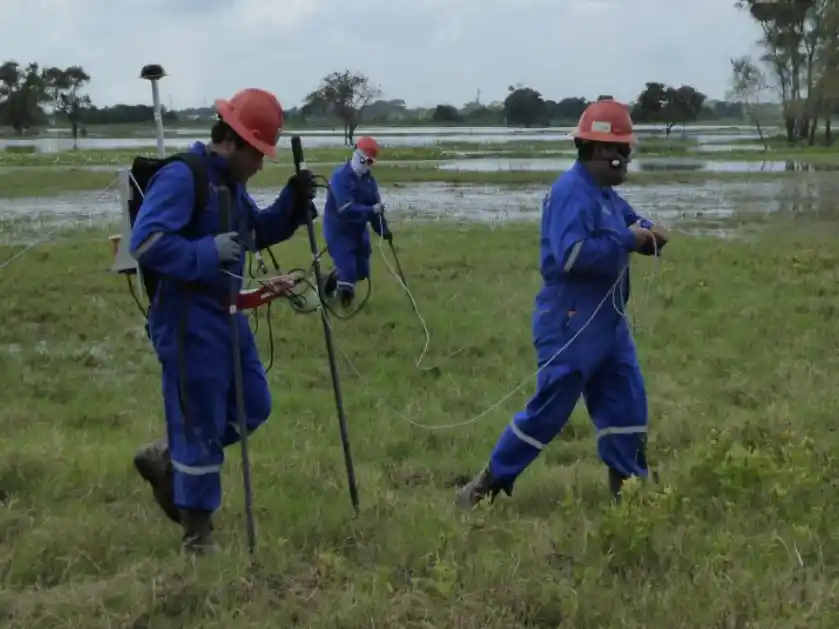
A CIPS measures the pipeline’s pipe-to-soil potential at closely spaced intervals (typically 1 m). This creates a high-resolution voltage profile along the pipe. By comparing the potentials to the required CP criterion (e.g. –850 mV Cu/CuSO₄), CIPS pinpoints areas that are under-protected or affected by interference.

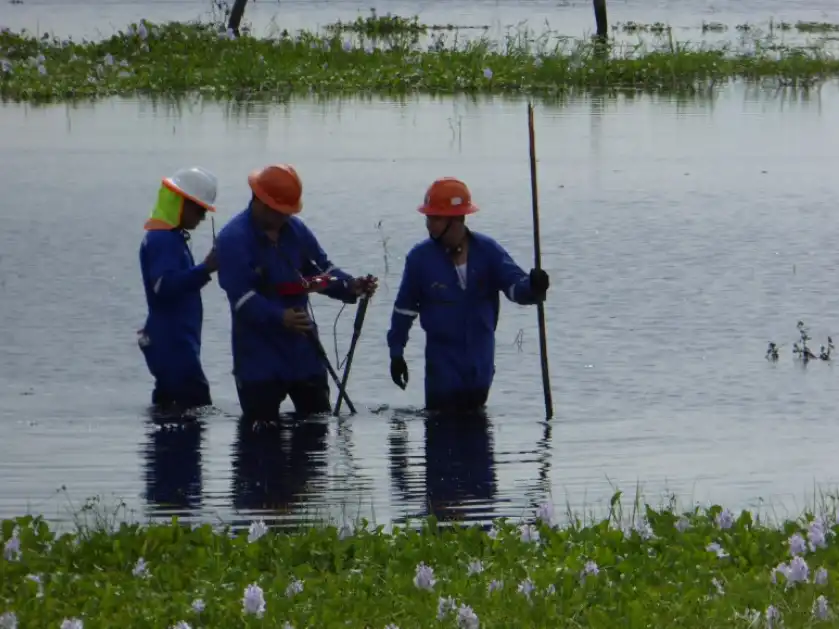
In practice, surveyors walk along the pipeline route, recording GPS-tagged potentials at each station under normal and interrupted CP conditions.
Key Benefits / Applications of CIP Survey

  • Detects subtle CP deficiencies: CIPS is very sensitive to small anomalies. It reveals locations where CP polarization is insufficient or coating is degrading before corrosion can start.
  • Continuous coverage: Provides a complete potential profile along the entire pipeline length, so no section is missed. This full-picture view helps confirm that all segments meet the CP protection criterion.
  • Early warning of problems: Abnormal potential swings often correspond to coating holidays or stray current interference. Catching these early helps prevent leaks and unplanned repairs.
  • Regulatory compliance: CIPS surveys are recognized by pipeline codes (NACE SP0169, ISO 15589, DOT CFR) as a best practice for CP monitoring. Regular CIPS testing (often annually or every few years) helps operators document compliance.
  • Data-driven maintenance: The precise potential data supports targeted action. Operators can prioritize CP rectifier adjustments or coating repairs based on specific weak spots identified by CIPS.

2. Direct-Current Voltage Gradient (DCVG) Survey

cathodic protection dcvg survey

A DCVG survey locates and grades coating faults (holidays) on a CP-protected pipe. With the CP system supplying DC current to the pipe, any coating defect draws current from the soil. This creates small voltage gradients on the ground surface around the defect. By walking above the pipeline with electrodes, the surveyor maps these gradient lines. The center of each defect is marked where the voltage gradient peaks. DCVG therefore pinpoints each holiday and estimates its severity (often expressed as a %IR drop).

Key Benefits / Applications of DCVG Survey

  • Exact defect location & size: DCVG literally leads you to the coating holiday. It not only finds where a defect is but also provides a relative size or severity index. This allows operators to rank defects for repair.
  • High sensitivity and resolution: Even small coating breaches that allow minimal current flow are detected. DCVG’s resolution means minor pinholes or cracks aren’t overlooked.
  • Cathodic protection insight: Because DCVG measures current flow at defects, it shows how well CP is working locally. Defects with high current draw indicate poor protection at that spot. Surveyors often compare “on” vs “off” potentials to assess CP effectiveness at each fault.
  • Operates under stray currents: Unlike some AC methods, DCVG works reliably even if stray electrical currents are present or neighboring pipelines exist. It uses the pipeline’s own CP pulse (or a temporary DC source) and simple copper sulfate probes.
  • Efficient repairs: Coupled with GPS, DCVG mapping lets you excavate only the locations of concern. Knowing each defect’s coordinates and severity means crews can dig and fix the coating exactly where needed, saving time and cost.

Survey Timing and Applications of CIPS & DCVG Surveys

GESIT’s CIPS and DCVG surveys are used whenever a pipeline’s cathodic protection or coating needs verification. Typical situations include:
  • Routine CP monitoring: Regulations often require annual CP testing. CIPS provides a detailed check that goes beyond simple test-station readings. 
  • New pipelines and after repairs: Before putting pipe into service (or after major maintenance/hot-work), surveys confirm that coatings and CP are functioning properly.
  • Pipeline integrity programs (ECDA): NACE SP0502 external corrosion assessment programs explicitly call for CIPS/DCVG surveys to identify likely corrosion sites. Results guide where to dig and inspect.
  • Troubleshooting anomalies: If field readings show sections near the CP criterion or inconsistent readings, CIPS/DCVG can isolate the cause (coating fault, interference, anode depletion, etc.).
  • Regulatory compliance: Industry codes (API 571/574, NACE SP0169, ISO 15589, DOT CFR) reference CIPS/DCVG as standard methods for verifying CP levels and coating integrity.
Performing CIPS and DCVG together is often efficient. For example, interrupting the CP supply for CIPS simultaneously creates the pulse DCVG uses. A combined survey yields synchronized data on both CP potential and coating condition in a single field pass, under the same conditions. This correlated approach saves time (one crew instead of two) and improves confidence in results.

Deliverables and Reporting

GESIT provides clear, actionable deliverables for each survey, including:
  • CIPS potential profile charts: Graphs of pipeline distance vs. pipe-to-soil potential (on/off plots) with GPS-referenced stationing. These charts highlight any locations where instant-off potentials fail to meet the protection criterion.
  • DCVG defect maps: Annotated pipeline maps or linear plots showing each identified coating fault with its severity metric (e.g. %IR drop). Defect centers and gradient shapes are marked so crews can find them easily in the field.
  • GPS-tagged location reports: Tabulated survey data with chainage or latitude/longitude for every measurement point and defect. All survey points (test stations, appurtenances, anomalies) are tied to precise coordinates.
  • Summary analysis: A written overview interprets the data. We describe overall CP effectiveness, note any interference or unusual conditions, and identify high-risk areas of the pipeline. This includes highlighting sections that need further attention.
  • Recommendations: Action items are prioritized based on the survey findings. These may include specific coating repairs, CP system tuning (rectifier set point changes, anode renewals), or additional follow-up surveys. Our report explains why each recommendation is needed and what benefit it provides.

All reports are delivered in both electronic (PDF/Excel) and printed formats as required. Data tables, GIS/GPS files, and charts are provided so you can integrate the results into your integrity management system. Our goal is to make the technical results easy to understand and act on, even for non-specialists, while preserving full accuracy.

Summary of Benefits CIPS & DCVG Survey

By using GESIT’s CIPS and DCVG services, pipeline owners gain:
  • Early detection of corrosion risk: Hidden coating defects and CP weaknesses are found before leaks occur.
  • Enhanced safety and reliability: Identifying and fixing CP problems early improves pipeline uptime and reduces the chance of failures or third-party damage.
  • Data-driven maintenance planning: You get precise charts and maps, not just anecdotes. This supports objective decision-making and efficient use of maintenance budgets.
  • Compliance assurance: Detailed survey documentation helps demonstrate adherence to industry standards (NACE, API, ISO, local regulators).
  • Cost savings: Targeted repairs and CP adjustments (based on survey data) minimize unnecessary excavation. Overall, early intervention saves on expensive repair and shutdown costs.

GESIT’s team of corrosion and cathodic protection experts will plan and execute each survey to meet your specific project needs. We follow best practices and use GPS-enabled data loggers to ensure accuracy. The final report distills complex CP data into clear guidance, so you have confidence in your pipeline’s protection and can prioritize work where it matters most.

Contact GESIT to learn how our CIPS and DCVG surveys can keep your buried pipelines safe, compliant and cost-effective.